Dr. Bret Weinstein: Why Clear Thinking Matters More Than Ever in a Post-AI World
AI is reshaping work. In a post-AI world, clear thinking, critical analysis, and strong decision-making matter more than ever.
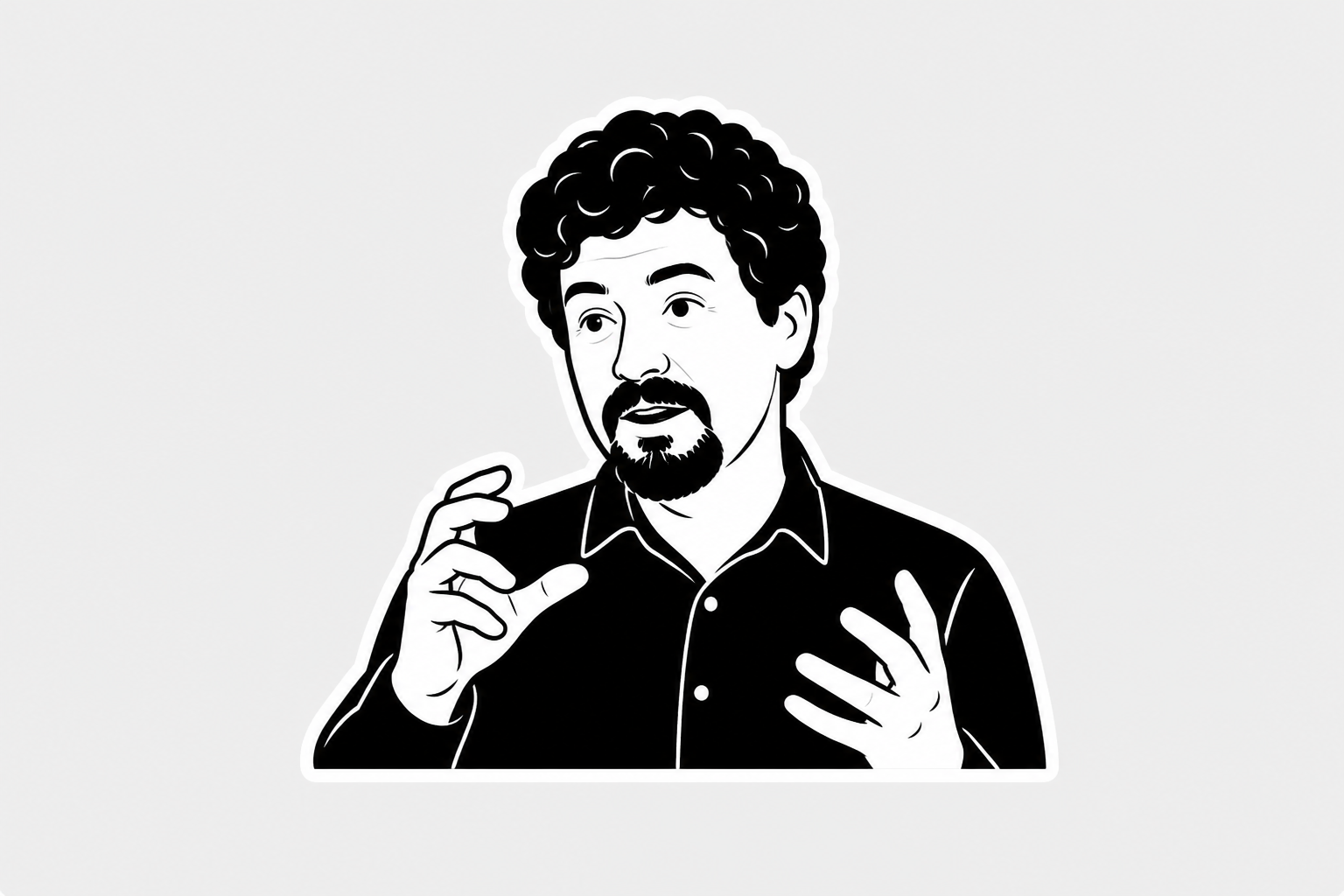
Dr. Bret Weinstein: Why Clear Thinking Matters More Than Ever in a Post-AI World
Cognitive skills are becoming the foundation of future work
In a podcast interview, Dr. Bret Weinstein described this moment as crossing an “event horizon.” His point was simple but unsettling: we’re entering a world where AI can outperform humans at many tasks once considered safe, technical and narrative work included. Because of that, Weinstein argues that investing in narrow specialization is starting to look risky. “Learn to code” may already be outdated advice, since coding is a task, and tasks are exactly what AI is learning to do well.
What he argues for instead is a cognitive toolkit: skills that don’t disappear when the tools change, that carry over to new problems, new fields, situations that don’t exist yet. Clear thinking. Critical reasoning. Decision-making under uncertainty. Problem-solving. Sense-making in complex systems.
This tracks closely with what future-of-work research has been showing for a while. As automation increases, employers consistently rank cognitive skills as the most important capabilities going forward. We go into this in The Most Important Work Skills in 2030, where critical thinking and decision-making outrank most technical abilities. The pattern holds: when tools get smarter, thinking becomes the bottleneck.
Information is abundant but clarity is not
Most people today are overwhelmed by information. Thoughts pile up, context gets lost, emotions quietly steer decisions, and ideas stay vague and untested. That’s a recipe for overthinking, hesitation, and reactive choices. Clear thinking has less to do with intelligence than with the ability to slow down, look at what’s actually happening, and decide what matters. That’s where journaling comes in.
Journaling trains cognitive skills in practice
Journaling gets dismissed as just writing about feelings or logging the day’s events. It can be that, but its deeper value is cognitive. Writing forces vague thoughts into language, and that act alone imposes structure. It exposes assumptions and shows the gaps in your reasoning. Research on reflective writing backs this up: journaling improves clarity, emotional regulation, problem-solving, and decision-making, largely because writing helps people process experience instead of carrying it around unexamined. You could say it makes thinking visible.
Do it long enough and it trains the same cognitive skills modern work demands. You start noticing patterns in your own thinking. You catch faulty reasoning earlier. Decisions get made with less emotional noise.
Writing slows thinking down (in a good way)
One of the core ideas behind Weinstein’s cognitive toolkit is that thinking needs space. People make better judgments when they aren’t constantly reacting. Journaling creates that space. You describe the situation rather than responding to it immediately. You explore options rather than jumping to conclusions. You examine things on the page rather than holding them all in your head. That slower, more deliberate mode of thinking becomes a habit, and habits compound.
Why this matters even more in an AI-driven world
AI makes output cheap and thinking becomes the scarce resource. If AI can generate ten strategies in seconds, the real value shifts to evaluating them: choosing what fits reality, weighing the tradeoffs. AI can suggest, but it can’t judge meaningfully in your context. It can generate answers, but it can’t decide what matters. That responsibility stays human, and journaling is one way to stay inside that loop. It supports the evaluation layer that AI can’t replace.
How Mindsera helps build this skill
Mindsera is built on the premise that thinking is a skill you can train, designed to help people develop clarity, reasoning, and self-awareness consistently. It does this through guided prompts that push past surface-level writing toward actual clarity, frameworks for breaking down decisions and complex problems, AI reflections that challenge assumptions rather than replace your thinking, mood and mindset tracking that surfaces the patterns affecting your judgment, and daily structure that turns reflection into a habit, whether that’s starting the day or closing it out. The goal is mental clarity, and Mindsera functions as a place to practice thinking regularly, the same way you’d train any skill that matters.
Clear thinking builds over time
Cognitive skills improve quietly in the background. Clear thinking today leads to better decisions tomorrow, fewer avoidable mistakes, less wasted effort, more intentional work. Over months and years, that compounds into better outcomes across work and your everyday life. The tools will no doubt keep changing but clear thinking lasts.
The future belongs to people who can think clearly
The post-AI world means working alongside machines rather than competing with them. AI handles speed and scale, while humans handle judgment, meaning, and responsibility. Clear thinking is what connects the two. Journaling is one of the simplest, most practical ways to build that ability, and Mindsera is designed to make the practice easier, deeper, and more consistent. Just clearer thinking, one journal entry at a time.