How to Start Journaling for Mental Health (Beginner's Guide)
Learn how to start journaling, step by step. A simple beginner's guide covering the benefits, a private daily routine, and prompts to build a habit that sticks.


Journaling is one of the most accessible things you can do for your mental health, and also one of the most underrated. Many people feel intimidated at first, worried they’re doing it wrong or that they have nothing meaningful to say. But there’s no right or wrong way to journal. All you need is a few minutes, a willingness to write freely, and somewhere to put your thoughts.
If you want to start journaling but don’t know where to begin, this guide covers everything: what it is, the many benefits it offers, and simple tips to build a journal practice that actually sticks.
Table of contents:
- What Is Journaling?
- How Journaling Helps Your Mental Health
- How to Start Journaling for Mental Health (Step-by-Step)
- What Should You Write About? (Simple Ideas to Start)
- What Is AI Journaling (and How Can It Help?)
- 10 Simple Journaling Prompts for Mental Health
- Tips to Make Journaling a Habit
- Common Journaling Mistakes to Avoid
- Different Types of Journaling to Try
- Can Journaling Replace Therapy?
- How Mindsera Helps You Get More Out of Journaling
- Final Thoughts: Start Small and Stay Consistent
- FAQs About Journaling
What Is Journaling?
Journaling is the everyday activity of writing down your thoughts and feelings on a regular basis. It’s a form of expressive writing: a way to process emotions, organize thoughts, and understand yourself a little better.
It doesn’t have to look any particular way. Some people write long, flowing entries. Others prefer short entries or bullet points. Some type on their phone; others write in a notebook. There’s no right or wrong way to do it. What matters is that you write consistently.
Want your journaling to feel more structured and guided from the start? Mindsera can prompt your writing and help you make sense of your thoughts as you go.
How Journaling Helps Your Mental Health
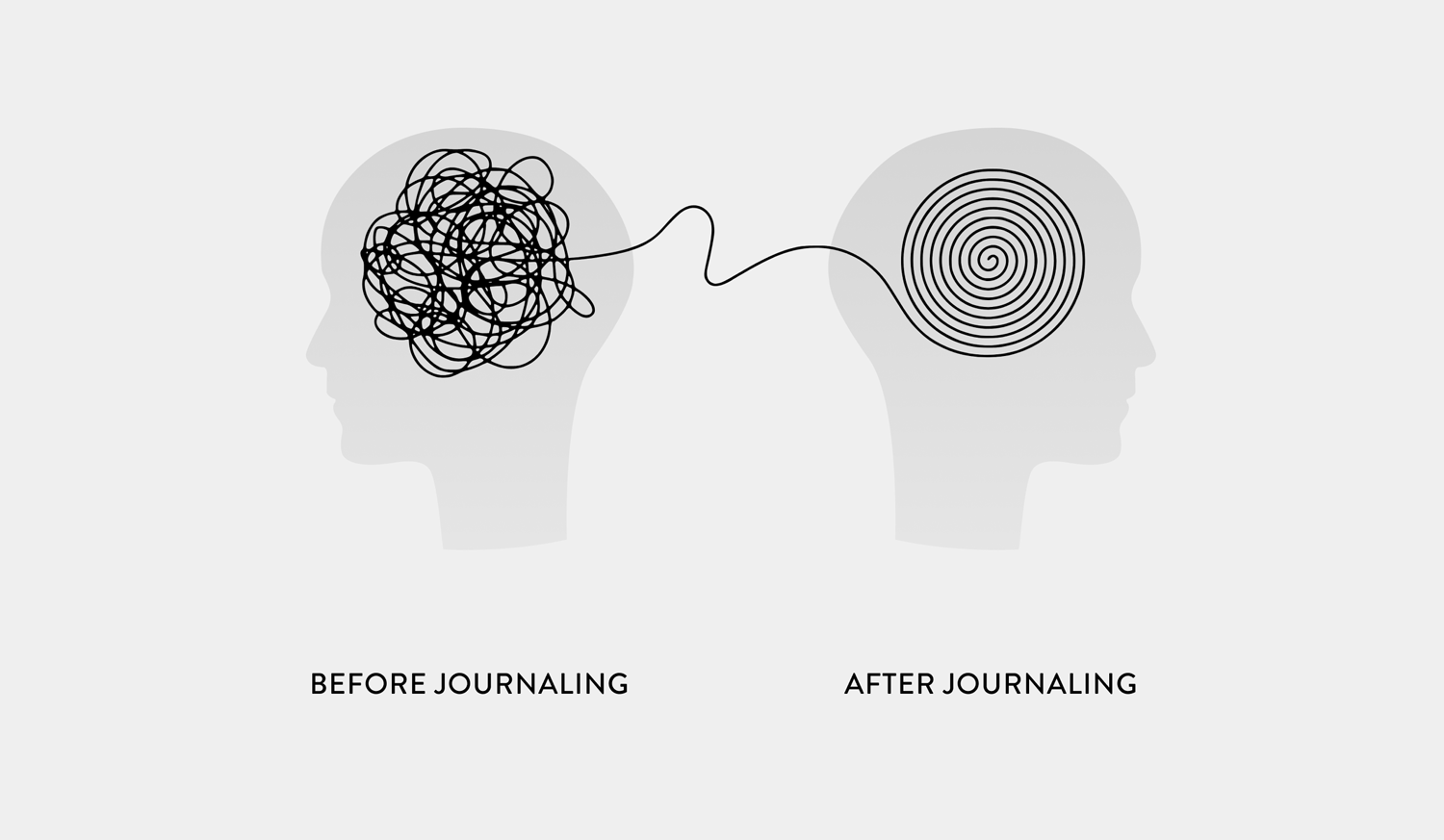
How does journaling actually help? It works by encouraging you to slow down and observe your own thinking, a process sometimes called metacognition. When thoughts stay inside your head, they can feel urgent and overwhelming. Writing things down creates distance, and that distance gives you perspective.
Here are some of the most well-supported mental health benefits of journaling:
Reduce stress and anxiety
Getting your worries onto the page can make them feel more manageable. Research shows that writing in a journal a few times a week for a while can help reduce anxiety and improve mood. Simply writing about what’s on your mind can relieve stress in a meaningful way.
Improve emotional clarity
Expressive writing forces you to find words for what you’re feeling. That act of naming an emotion supports emotional regulation and helps you begin to process it rather than push it away.

Increase self-awareness
A regular journal practice helps you identify patterns in your thoughts and behaviors over time. You start to notice emotional triggers, recurring worries, and what genuinely supports your well-being.
Process difficult emotions
Rather than suppressing negative emotions, journaling gives them somewhere to go. It creates a safe space for emotional expression and emotional processing, which is especially useful when experiences feel too raw or complex to talk about.
Support better sleep and mental clarity
Writing before bed can help you offload mental chatter that keeps you awake. Research also suggests that expressive writing may help lower blood pressure and strengthen immune function, connecting emotional wellness to physical health in meaningful ways.
Build resilience
Journaling regularly helps you develop new perspectives on difficult experiences. Over time, this kind of self-reflection supports emotional processing and builds resilience, making it easier to navigate stress and uncertainty.
Support recovery from affective disorders
Journaling is often recommended as a coping strategy for people diagnosed with depression, anxiety, and other affective disorders. For people dealing with major depressive disorder, it can be a helpful tool alongside professional support, not a replacement for it, but a meaningful part of a self-care practice.
How to Start Journaling for Mental Health (Step-by-Step)
The biggest barrier to journaling is the feeling that you don’t know how to do it right. Here’s a simple approach to get started without overthinking it.
1. Choose a format that feels easy
The best format is the one you’ll actually use. That might be a classic paper notebook, a notes app on your phone, or a dedicated journaling app. Don’t get caught up in finding the perfect setup. Convenience matters more than aesthetics when you’re trying to build a new habit.
2. Start small (5–10 minutes is enough)
You don’t need to write for an hour to get the benefits of journaling. Even five minutes of honest writing can shift how you feel. Starting small removes the pressure that makes many people give up before they’ve really begun. Set a timer if it helps.
3. Pick a consistent time
Morning and evening are the most popular times to journal daily. Morning writing helps you set intentions and focus before the day begins. Evening writing is great for reflection, wrapping up your daily activities and releasing tension before sleep.
The best time is whichever you can stick to. Tying your journal practice to something you already do, like morning coffee or brushing your teeth, makes it easier to build the habit.
4. Find a private space
Writing honestly requires feeling safe. Find a private space where you won’t be interrupted and where you feel comfortable enough to write without self-editing. Your journal is for your eyes only.
5. Write freely without judgment
A judgment-free approach is one of the most important things you can bring to journaling. Ignore grammar, spelling, and structure entirely. You don’t need to write complete sentences or sound coherent. The goal isn’t good writing but rather honest thinking.
6. Focus on thoughts and feelings
A lot of people start journaling like they’re writing a report: “I went to work, had lunch, came home.” That’s a fine starting point, but the real value comes from going one layer deeper. Not just what happened, but how you felt about it and why. That shift is really the difference between a diary and a journal.
7. Keep it consistent, not perfect
You’ll have days when your entries feel insightful and you’ll have more days when they’re flat or barely a paragraph. Both count. Consistency matters far more than quality. Writing regularly, even imperfectly, is what creates the long-term mental health benefits.
If you want a more guided experience from the start, Mindsera offers prompts, structure, and real-time feedback as you write, so you’re never stuck staring at a blank page.
What Should You Write About? (Simple Ideas to Start)
One of the most common reasons people avoid journaling is not knowing what to write. Here are some easy starting points:
- Your day: just describe what happened and how it felt
- Your emotions: what are you feeling right now, and where might that be coming from?
- Something that’s stressing you: write it out without trying to solve it
- Something you’re grateful for: even something small counts
- A current challenge: explore it from different angles
- Positive events or experiences: what went well this week?
- Negative thoughts: write them down without judgment to get some distance from them
- A conversation that stuck with you: what made it linger?
None of these need to turn into a deep dive. Short entries are completely valid and still part of a meaningful journal practice.
What Is AI Journaling (and How Can It Help?)
AI journaling means journaling with an intelligent assistant in the loop, one that can respond to what you write, offer personalized journaling prompts, and help you reflect more deeply.

Instead of staring at a blank page, you get a question tailored to what’s on your mind. Instead of re-reading the same thoughts week after week, you get a summary of emotional patterns and recurring themes you might not have noticed on your own.
For many people, AI journaling helps with four common struggles:
- Not knowing what to write: prompts give you somewhere to start
- Staying on the surface: follow-up questions support deeper self-reflection
- Missing patterns: analysis across entries helps you identify patterns over time
- Losing consistency: reminders and insights make it easier to journal daily
Mindsera is built around this idea. It supports emotional processing, helps you develop positive self-talk, and tracks your emotional experiences over time, all while keeping your entries completely private.
10 Simple Journaling Prompts for Mental Health
These journaling prompts are designed to get you out of your head and onto the page. Use them whenever you’re not sure where to start.
- How am I feeling right now, and why?
- What’s been on my mind the most lately?
- What stressed me out today?
- What went well today, even if it was small?
- What do I need right now that I’m not getting?
- What’s one thing I can let go of?
- What am I avoiding, and why?
- What would I tell a loved one if they were going through what I’m going through?
- What am I most grateful for this week?
- What would make tomorrow feel like a good day?
Not sure where to begin? Mindsera can suggest journaling prompts based on what’s on your mind, helping you move from “I don’t know what to write” to meaningful reflection in seconds.
Tips to Make Journaling a Habit
Starting is easy. Sticking with it is where most people struggle. Here are some practical tips:
Start ridiculously small. Two sentences count. Lower the bar so low that skipping feels silly.
Tie it to something you already do. Habit researchers call this “habit stacking.” Journal after your morning coffee, or just before bed. The existing routine becomes the trigger for the new one.
Don’t overthink it. Journaling doesn’t need to be a meaningful ritual every time. Some entries will be dull. That’s part of any healthy journal practice.
Use prompts when you’re stuck. Blank page anxiety is real. Keep a short list of go-to journaling prompts for the days when nothing comes to mind naturally.
Accept the “bad” entries. The days when you write something uninspired aren’t failures. Instead, they’re evidence of consistency, and those entries matter too.
Be grateful, even briefly. Even on difficult days, noting one positive thing supports a gratitude journaling habit and can subtly shift your mood over time.
Common Journaling Mistakes to Avoid
A few habits can quietly undermine your journal practice:
Trying to write perfectly. If you’re editing yourself as you go, you’re performing, not journaling. A judgment-free approach means letting it be messy.
Being inconsistent and then quitting. Missing a few days doesn’t mean you’ve failed. Just start again. The goal is a sustainable practice, not a perfect record.
Only venting without reflecting. Emotional expression is valuable, but journaling purely as an outlet without any self-reflection can keep you stuck in the same patterns. Try to move toward what you’re taking from the experience, not just what happened.
Making it feel like a chore. If journaling starts to feel like homework, change something: the time, the format, the prompts. The practice should support your well-being, not add to your stress.
If you find yourself repeating the same thoughts without gaining clarity, Mindsera can analyze your writing and suggest alternative perspectives to help you move forward.
Different Types of Journaling to Try
If one approach isn’t working for you, experiment with a different style:
Free writing: write without stopping or editing for a set amount of time. Whatever comes out, comes out. Great for clearing mental clutter and processing negative emotions.
Gratitude journaling: focus on positive experiences and what’s going well. Research consistently links this approach to improved mood and emotional wellness over time.
Bullet journaling: a structured, shorthand approach using short entries, lists, and symbols. Works well for people who feel intimidated by open-ended writing.
Reflection journaling: review your week, a decision you made, or a difficult emotional experience you’re still sitting with. More structured than free writing, but open-ended enough to support real self-reflection.
Expressive writing: write honestly about difficult emotions, emotional triggers, or challenging experiences without worrying about structure or how it sounds. This is one of the most researched forms of therapeutic writing.
Try a few and see what fits. You can also combine styles depending on your mood or what your mental health today calls for.
Can Journaling Replace Therapy?
No, and it’s worth being direct about this. Journaling is a powerful self-care practice and a helpful tool for self-reflection, emotional regulation, and personal growth. But it is not a substitute for professional support.
If you’re dealing with significant anxiety, major depressive disorder, trauma, or other affective disorders, please reach out to a licensed mental health professional. For people diagnosed with serious mental health conditions, journaling works best as a complement to professional support, not a replacement for it.
How Mindsera Helps You Get More Out of Journaling
Journaling has many benefits, but most people run into the same obstacles: not knowing what to write, staying on the surface of their thoughts and feelings, or losing the habit before it sticks.
Mindsera is designed to address exactly those friction points, without getting in the way of the writing itself.
- Not knowing what to write → Mindsera gives you personalized journaling prompts based on what’s on your mind
- Struggling to reflect deeply → It analyzes your writing and suggests new perspectives to consider
- Missing patterns over time → It tracks your emotions and recurring themes across entries, so you can identify patterns you’d otherwise miss
- Losing consistency → Reminders and weekly insights help you journal daily and stay engaged with your practice
The goal is to make journaling more useful. Your entries stay private, and the app becomes more relevant to your emotional experiences the more you use it.

Final Thoughts: Start Small and Stay Consistent
The most important thing about mental health journaling is simply starting. Not finding the perfect notebook or writing the perfect first entry. Just starting.
Even five minutes a day, a few times a week, can make a real difference in how you process emotions, organize thoughts, and understand yourself. The benefits of journaling build slowly, and then one day you look back at an entry from months ago and realize how far you’ve come.
The most important step is to start journaling; even a few minutes a day can make a difference. But if you want to go beyond simply writing and start truly understanding your thoughts, Mindsera can help you turn journaling into a powerful tool for personal growth.
FAQs About Journaling
How do you start journaling for mental health?
Start by setting aside a few minutes each day in a safe, distraction-free space where you can write freely. There’s no right or wrong way; you can use a notebook or a journaling app, whichever feels easiest. Focus on writing about your thoughts, feelings, or daily experiences to organize your mind and build a consistent self-care practice.
What should I write in a mental health journal?
You can write about your thoughts, daily experiences, or difficult emotions you’re trying to process. Many people practice gratitude journaling, focusing on positive events and what went well during the day. Others choose to explore their negative thoughts, writing them down to better understand their thinking patterns. This kind of emotional expression helps you gain clarity and improve emotional wellness over time.
What are the benefits of journaling for mental health?
Research shows that journaling can help relieve stress, improve emotional regulation, and support overall mental health. It may also benefit physical health, including helping lower blood pressure, while strengthening healthy habits and emotional processing.
How does journaling help process difficult emotions?
Journaling helps you process difficult emotions by creating distance between your thoughts and feelings. Writing about emotional triggers, challenging experiences, or intense emotions can help you gain new perspectives and build long-term resilience.
Can journaling replace professional mental health support?
No, while journaling is a powerful self-care tool, it should not replace professional support, especially for conditions like major depressive disorder or other serious mental health challenges. Instead, it works best alongside therapy to help you process emotions and organize your thoughts.
How often should you journal for mental health?
Consistency matters more than duration. Even journaling for a few minutes a day can help you stay grounded in the present moment, reflect on positive experiences, and organize thoughts. Many people find it helpful to journal as part of their daily routine.